

If you’ve been diagnosed with a neuroma and conservative treatments haven’t relieved your pain, you may have been told that surgery is the next step.
But surgery isn’t your only option.
Newer treatments like cryoablation offer a less invasive way to reduce nerve pain — often with faster recovery and fewer long-term side effects. Understanding the differences between these approaches can help you make a more informed decision about your care.
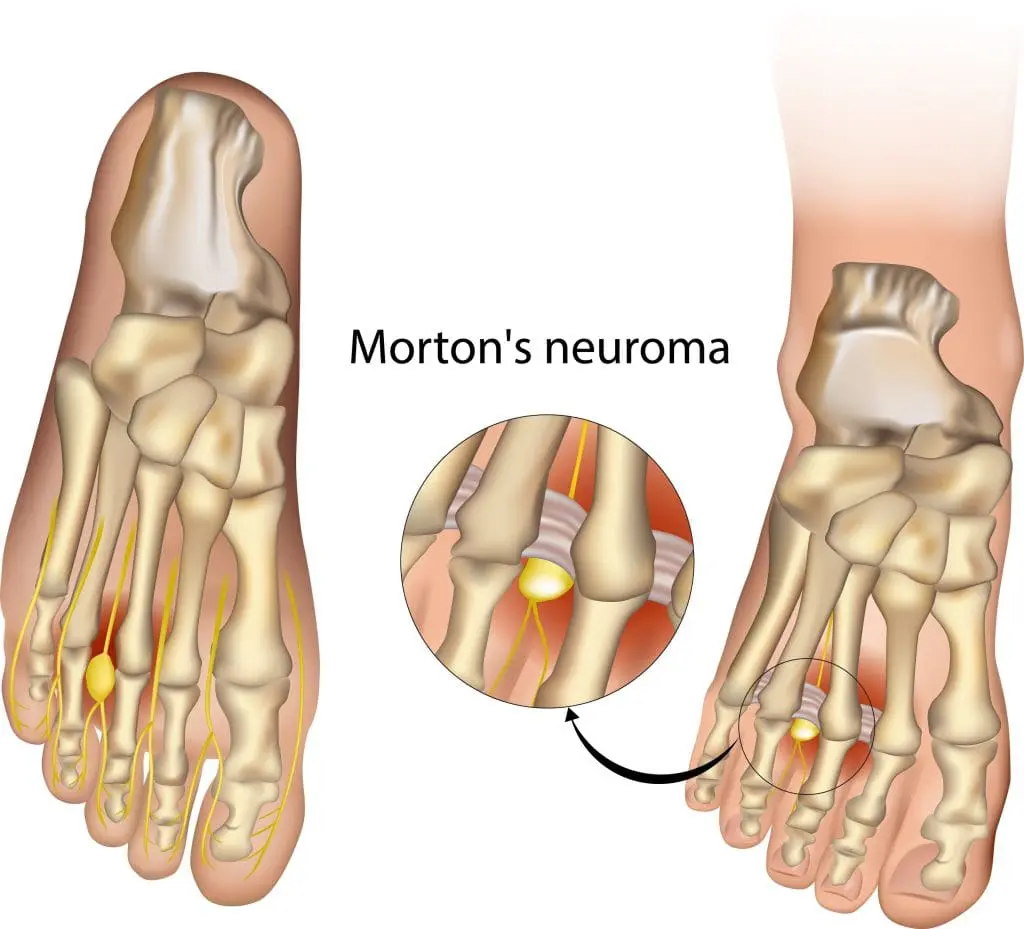
What Is a Neuroma?
A neuroma is a thickening of nerve tissue, most commonly found between the toes (often called Morton’s neuroma). It can cause:
- Burning or sharp pain in the ball of the foot
- Tingling or numbness in the toes
- The sensation of walking on a pebble or a folded sock
When symptoms persist despite rest, footwear changes, orthotics, or injections, advanced treatment may be recommended.
Cryoablation vs Traditional Neuroma Surgery
Here’s how the two approaches compare:
Cryoablation
- Minimally invasive, performed in-office
- Uses controlled cold therapy to disrupt pain signals
- Preserves the nerve (not removed)
- Minimal tissue damage
- Lower risk of stump neuroma
- Faster recovery and return to activity
- Typically less downtime and lower overall cost
Traditional Neuroma Surgery
- Requires a surgical incision
- Involves removal of the affected nerve
- Permanent tissue and nerve changes
- Higher risk of stump neuroma
- Longer recovery period
- Greater downtime from work and activity
- Higher overall cost due to surgical and facility fees
Why Surgery Isn’t Always the First Choice
Traditional neuroma surgery can be effective, but it is also more aggressive than many patients expect.
Because the nerve is removed, patients may experience:
- Permanent numbness in the toes
- Risk of developing a stump neuroma (recurrent pain)
- Extended recovery time
- Limitations in activity during healing
For many patients, exploring less invasive options first may provide relief without these trade-offs.
How Cryoablation Works
Cryoablation uses targeted cold therapy to interrupt pain signals from the affected nerve while preserving surrounding tissue.
Because the nerve is not removed and large incisions are avoided, the procedure is typically:
- Performed in-office
- Well tolerated
- Associated with faster recovery
This makes it an appealing option for patients who want to stay active and avoid surgery when possible.
Who Is a Good Candidate for Cryoablation?
Cryoablation may be a good option if you:
- Have chronic neuroma pain
- Have not responded to conservative treatments
- Want to avoid surgery
- Prefer a minimally invasive approach
A proper evaluation is necessary to determine whether this treatment is appropriate based on your symptoms, anatomy, and goals.
What to Expect From Treatment
While every patient is different, cryoablation is generally:
- Performed in a clinical setting
- Completed without large incisions
- Associated with minimal downtime
- Followed by a quicker return to normal footwear and activity compared to surgery
Is Cryoablation Widely Available?
Cryoablation for neuroma pain is a specialized treatment and is not offered at every practice.
Patients often seek out providers who offer this option to avoid more invasive procedures and reduce recovery time.
Which Treatment Is Right for You?
Choosing between cryoablation and surgery depends on several factors, including:
- Severity and duration of symptoms
- Previous treatments
- Lifestyle and activity level
- Personal preference regarding recovery and risk
For many patients, starting with a less invasive option like cryoablation can be a practical first step before considering surgery.
If you’re dealing with ongoing neuroma pain, you have more options than you might think. Understanding the differences between treatments like cryoablation and traditional surgery can help you choose a path that aligns with your goals and lifestyle.
Less downtime. Less tissue damage. Smarter neuroma care.
Where your active life begins again.