
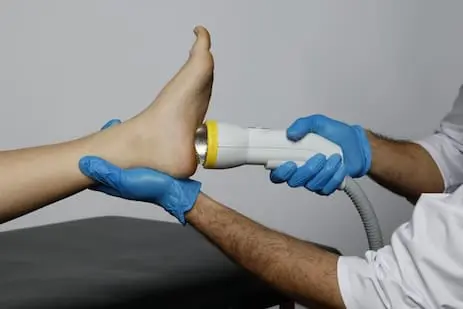
If you’re dealing with chronic foot or ankle pain—such as plantar fasciitis or Achilles tendinitis—you may feel like you’ve tried everything. Rest, orthotics, injections, and physical therapy don’t always provide lasting relief.
Surgery is often presented as the next step, but it is not the only option. Treatments like SoftWave® shockwave therapy are helping patients reduce pain, improve healing, and return to activity without invasive procedures.
What is SoftWave® shockwave therapy?
SoftWave® therapy uses focused acoustic shockwaves, which are high-energy sound waves, to stimulate healing in damaged tissue. These waves travel through the skin and into deeper structures, including tendons, ligaments, fascia, and bone.
This allows the body to restart its natural healing response, particularly in areas where healing has slowed or stopped. Unlike treatments that only address symptoms, this approach is designed to promote actual tissue repair.
How is SoftWave® different from other shockwave treatments?
Not all shockwave therapies work the same way. The key difference lies in how the energy is delivered.
Focused shockwave therapy, such as SoftWave®, delivers true acoustic waves that penetrate deep into tissue and bone. This enables targeted treatment and a stronger biological response, including the activation of growth factors and improved blood flow.
Radial shockwave devices, often referred to as EPAT, use pressure-based waves that remain closer to the surface. These treatments may provide temporary relief but do not deliver the same level of depth or precision.
Understanding this difference is important when comparing treatment options, especially for chronic or persistent conditions.
How does SoftWave® therapy help the body heal?
SoftWave® therapy works by triggering a series of biological responses that support healing at the cellular level.
These responses may include increased blood flow to the affected area, release of growth factors, activation of stem cells, and improved oxygen delivery. The therapy also supports collagen remodeling, which is essential for restoring the strength and structure of damaged tissue.
This process can help restart healing in conditions that have been resistant to other forms of treatment.
What conditions can SoftWave® therapy treat?
SoftWave® therapy is used to treat a range of foot and ankle conditions, particularly those involving chronic pain or delayed healing.
Plantar fasciitis is one of the most common conditions treated, with shockwaves targeting the source of heel pain and promoting tissue repair. Achilles tendinitis and tendinosis can also respond well, as the therapy helps restore tendon structure and reduce inflammation.
In cases of stress fractures or delayed bone healing, focused shockwaves can stimulate bone repair by activating osteoblast activity. The treatment may also be used for chronic foot and ankle pain, including tendon injuries and post-surgical scar tissue.
What can you expect during treatment?
SoftWave® therapy is designed to be a straightforward, in-office procedure. Treatments typically last around ten minutes and do not require anesthesia, injections, or incisions.
Most patients experience little to no downtime and are able to return to normal daily activities shortly after treatment. Improvements may begin within a few weeks, depending on the condition and individual response.
The treatment can also be combined with other approaches, such as orthotics or rehabilitation, when appropriate.
Is SoftWave® therapy a good alternative to surgery?
For many patients, SoftWave® therapy offers a way to address pain and promote healing without the need for surgery. It may reduce recovery time, minimize risk, and provide a less invasive path forward.
However, the right treatment depends on several factors, including the severity of the condition, how long symptoms have been present, and the patient’s activity level and goals. A thorough evaluation is necessary to determine whether this approach is appropriate.
Who is a good candidate for SoftWave® therapy?
Patients who have ongoing foot or ankle pain and have not found relief through conservative care may be good candidates for SoftWave® therapy. It is often considered by those who want to avoid surgery or are looking for a minimally invasive treatment option.
Because every condition is different, a personalized assessment is important to determine whether this treatment aligns with the patient’s needs.
If you are exploring options for chronic foot or ankle pain, understanding how treatments like SoftWave® therapy work can help you make a more informed decision about your care.