
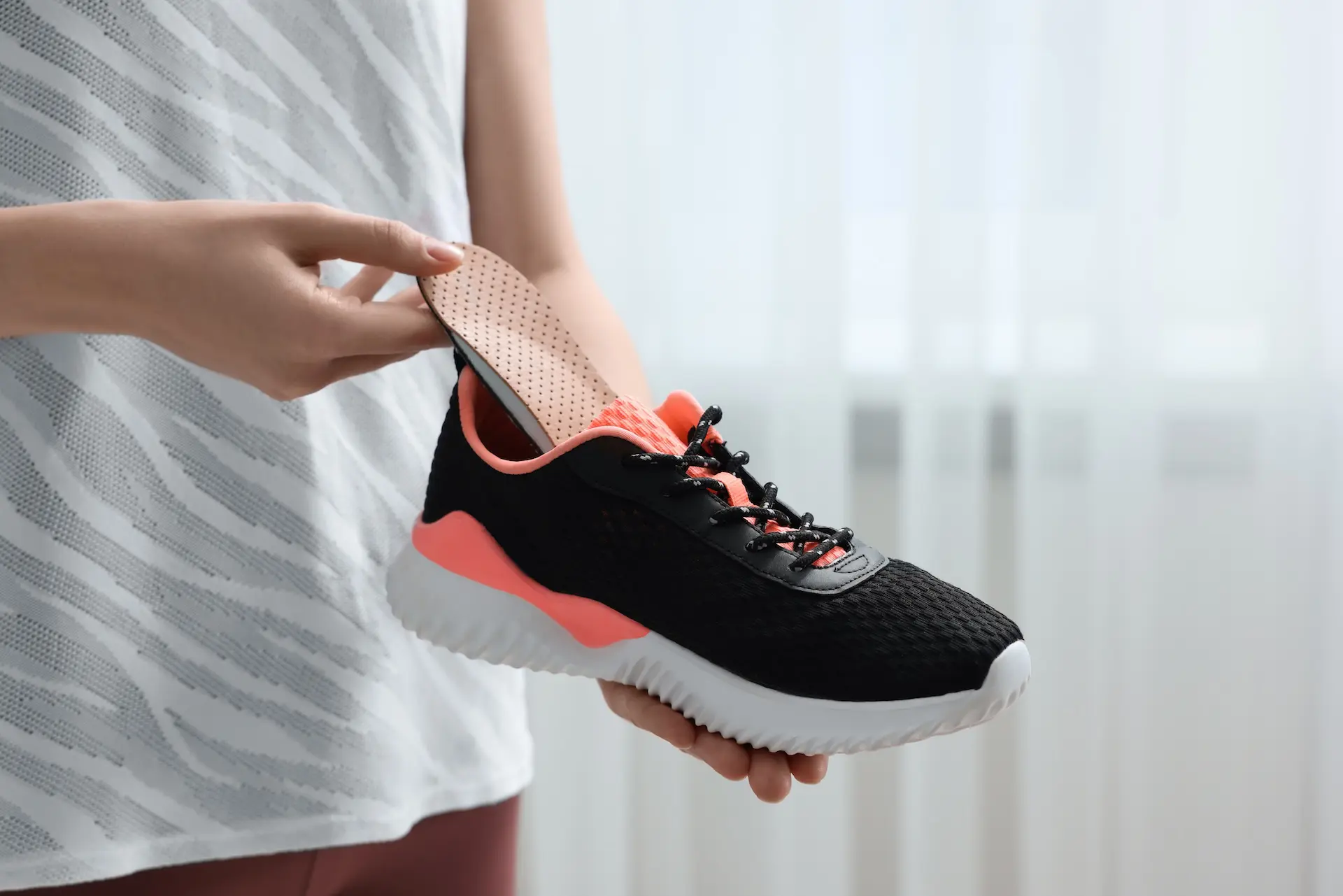
Your feet provide the foundation for nearly everything you do. Whether you are exercising, working on your feet, walking through the neighborhood, or keeping up with your family, your feet absorb pressure with every step.
When that pressure is not distributed evenly, certain areas of the feet and ankles may experience additional strain. Over time, this can contribute to recurring heel pain, arch discomfort, fatigue, or overuse injuries.
Custom orthotics provide personalized support based on the structure of your feet and the way you move. Unlike a standard cushion placed inside your shoe, custom orthotics are designed to address your individual foot mechanics, symptoms, activity level, and footwear needs.
What Are Custom Orthotics?
Custom orthotics are specially designed devices worn inside your shoes. They are created following a professional evaluation of your feet, ankles, lower legs, and walking pattern.
Depending on your needs, an orthotic may be designed to:
- Support the foot in specific areas
- Redistribute pressure more evenly
- Reduce stress on irritated muscles and tendons
- Improve stability during walking or exercise
- Add cushioning to sensitive areas
- Accommodate differences in foot structure
Some orthotics are firmer and designed to influence how the foot moves. Others are softer and provide additional cushioning or pressure relief. The right design depends on your symptoms, foot structure, daily activities, and treatment goals.
How Can Custom Orthotics Help?
Custom orthotics do more than make shoes feel softer. Their purpose is to support the feet where support is needed most.
Redistribute Pressure
Every foot handles pressure differently. Some people place more weight on the inside or outside of the foot, while others experience concentrated pressure beneath the heel or ball of the foot.
Custom orthotics can help redistribute that pressure so one area is not absorbing excessive force with every step.
Support Foot Mechanics
Your feet, ankles, and lower legs work together when you stand, walk, or run. When the foot moves inefficiently, surrounding muscles, tendons, and joints may have to work harder.
An orthotic may help support more efficient movement and reduce unnecessary strain during daily or athletic activity.
Reduce Repetitive Stress
Many foot and ankle problems develop gradually. Running, prolonged standing, repetitive exercise, and demanding work environments can continually stress the same structures.
By supporting the foot and changing how pressure is distributed, custom orthotics may help reduce the repetitive strain contributing to discomfort.
Make Shoes More Comfortable
Orthotics can also provide targeted cushioning and support inside work boots, athletic shoes, walking shoes, and certain everyday footwear. The goal is not only to improve comfort, but to help you remain active with less irritation.
What Conditions May Be Treated With Orthotics?
Custom orthotics may be included in a treatment plan for conditions such as:
- Plantar fasciitis
- Heel and arch pain
- Arthritis
- Tendinitis
- Flat feet
- High arches
- Bunions
- Bursitis
- Recurring overuse injuries
- Painful calluses or areas of concentrated pressure
- General foot fatigue
Whether orthotics are appropriate depends on the cause of your symptoms. They are not automatically the right solution for every type of foot pain, which is why an evaluation is important. Orthotics may also be combined with stretching, footwear changes, activity modifications, physical therapy, Shockwave Therapy, MLS Laser Therapy, or another recommended treatment.
Custom Orthotics vs. Store-Bought Inserts
Store-bought inserts and custom orthotics are not the same.
Over-the-counter insoles are mass-produced and usually designed to provide general cushioning or arch support. They may be helpful when you simply want additional comfort inside your shoes.
Custom orthotics are created specifically for your feet. Their design is based on a professional examination, your foot structure, how you walk, and the condition being treated. A device is not considered a prescription custom orthotic simply because it is labeled “custom” or selected using a machine at a retail store.
A professional evaluation may be appropriate when:
- Foot or heel pain continues to return
- Your shoes wear down unevenly
- Standing or walking causes persistent fatigue
- Pain interferes with exercise or daily activities
- You repeatedly develop discomfort in the same area
- Store-bought inserts have not provided enough relief
What Happens During an Orthotics Evaluation?
At Active Life Foot & Ankle of Texas, your evaluation begins with understanding your symptoms, activities, goals, and the types of shoes you wear most often.
Dr. Paul Steinke will examine your feet and ankles and evaluate how they function while you stand and move. This helps determine whether your discomfort is related to pressure, foot structure, movement patterns, an injury, or another underlying condition.
When custom orthotics are recommended, detailed information about your feet is used to create support designed for your individual needs. Your orthotics may also be adjusted based on your footwear and how they feel during everyday use.
Are Custom Orthotics Right for You?
Recurring foot pain is often a sign that something continues to place stress on the same area. Adding temporary cushioning may help you feel better for a short time, but it does not always address why the discomfort keeps returning.
A foot and ankle evaluation can help identify the source of your symptoms and determine whether custom orthotics should be part of your treatment plan.
At Active Life Foot & Ankle of Texas, our goal is to help you move comfortably, recover effectively, and return to the activities that are important to you.
Take the Next Step Toward More Comfortable Movement
Do not let recurring foot or ankle discomfort become your new normal. Schedule an evaluation with Dr. Paul Steinke to learn whether custom orthotics or another personalized treatment option can help.